
Work Order Insights
Unlocking stagnant work order data to support faster, smarter repairs for agricultural service technicians.
Role
As an Intermediate Product Designer, I conducted user interviews and played a significant role in the prototyping and iteration processes. I collaborated with other designers, our developers, and our product manager during our product discovery process.
Outcome
A feature that seamlessly integrates within the original product, providing insights from all relevant past work order history.
Company
Vi by visorPRO
Project Team
Design (2)
Product Manager (1)
Developers (7)
and many, many more…
Duration
3 months (Oct 2024–Jan 2025)
Tools
Figma
A feature that seamlessly integrates within the original product, providing insights from all relevant past work order history.
Process
Transforming a tech-heavy solution into a design decision.
For this feature, we adapted our design process. Our developers initially explored the problem to understand the technological limitations. Then, the design team tested concepts and ideas with users, keeping those limitations in mind.
Problem Space
Service technicians in agriculture experience high turnover rates, often leaving with their accumulated knowledge.
Service technicians in agriculture face high turnover rates, leading to the loss of valuable, accumulated expertise when they leave their positions. This knowledge drain can significantly impact the efficiency and effectiveness of agricultural service operations.
Opportunity
Capture valuable internal knowledge from service technicians before they leave.
Whether it be retirement or a change of industry, the experience and knowledge gained on the job during repairs are lost when a person leaves. This loss of expertise can lead to slower repair times, increased errors, and ultimately, decreased profitability for agricultural service businesses. By leveraging technology, we can capture and preserve this valuable knowledge, ensuring it remains accessible to the entire team, regardless of individual turnover.
Ideation
Initial ideas for capturing internal knowledge focused heavily on user-generated content. The plan involved AI answers being iteratively improved through user edits, as well as allowing users to create their own knowledge articles, similar to those published by the OEM. This knowledge would then be stored in Vi’s knowledge base for the entire service department to access.
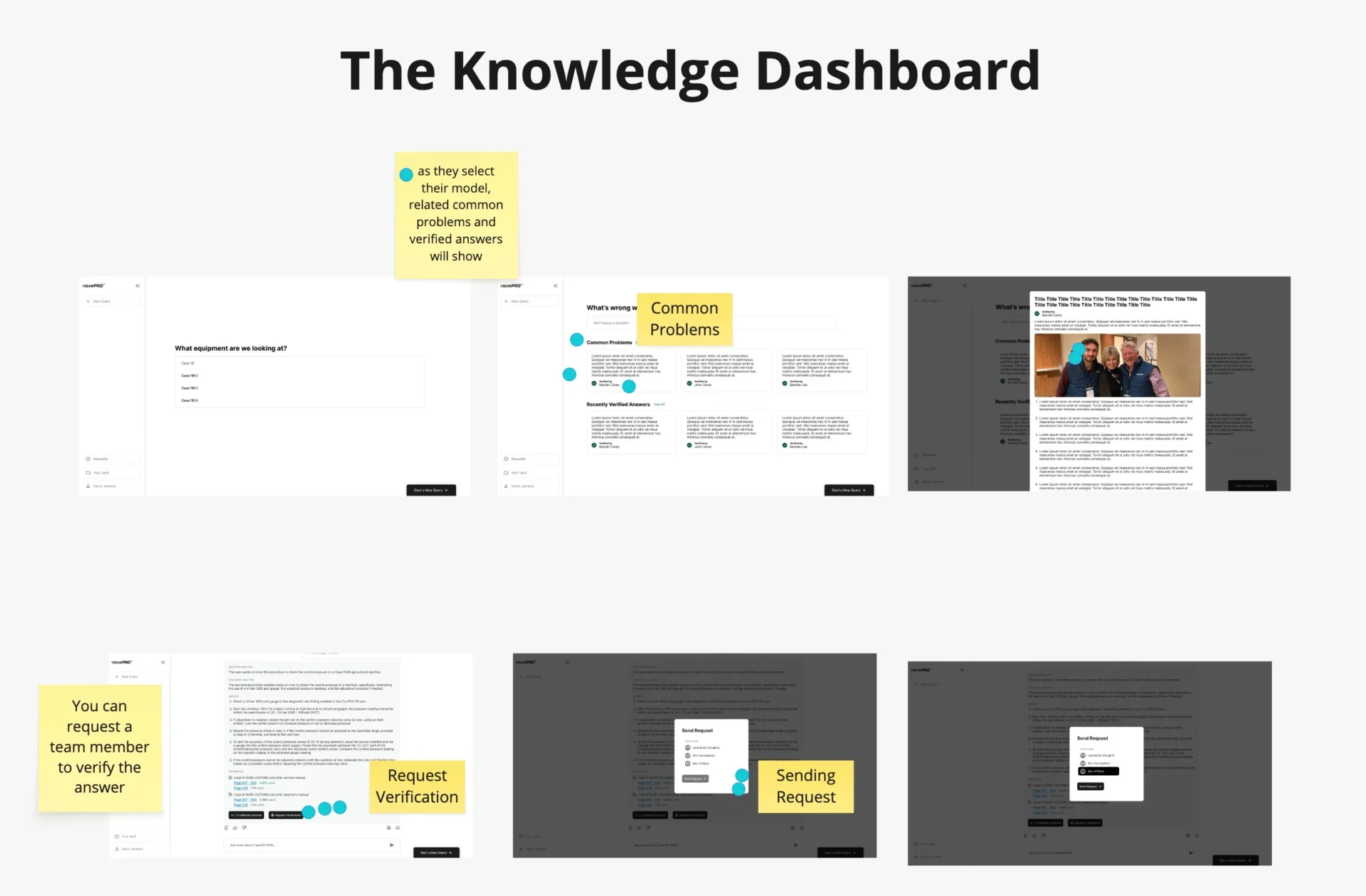
Wireframe of initial idea of being able to generate knowledge articles, and improve answers Vi provides.
Testing
There's already too much paperwork.
We tested our prototype with service technicians and service managers across three agricultural dealerships.
Our interviews revealed that their daily tasks already involve a significant amount of paperwork. One area that consumed a great deal of their time was meticulously detailing work orders to ensure successful warranty claims processing.
We also learned that most dealerships use two main business system providers, resulting in very similar work order formats. These business systems have outdated processes, with work order searches limited to the work order number.
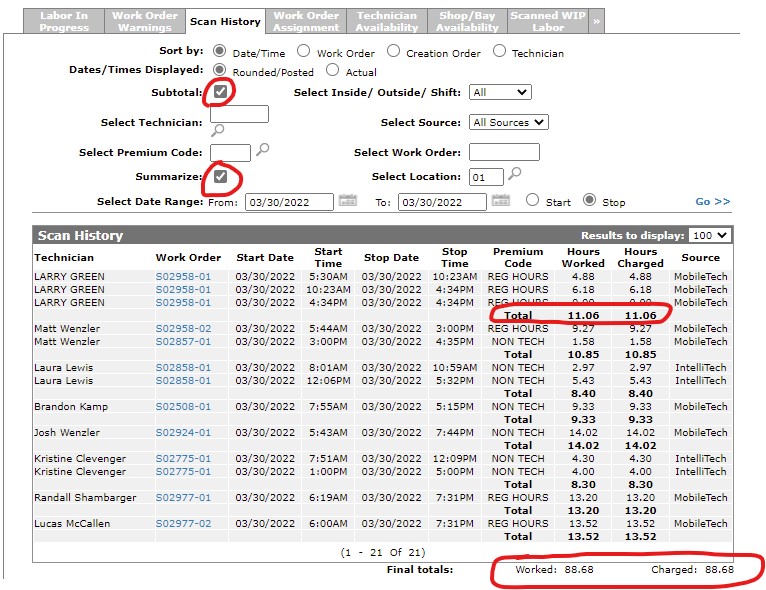
Example of what a typical dealership’s current business system looks like.
"There are no ways to properly search the contents of a work order in our current business system."
– Participant A from our qualitative user interview
Iterations
Switching our focus on to work orders
After our interviews, it was clear: We shouldn’t create a second system to capture internal knowledge, as technicians have been doing so all along. The issue is that the business systems used for work orders aren’t designed to easily reference past procedures.
In came the idea for Work Order Insights:
What if we pulled all relevant work orders, then highlighted the most important parts of each one?
We revisited some interviewees from our testing to determine which work order areas were most important to them and what they recommended highlighting.
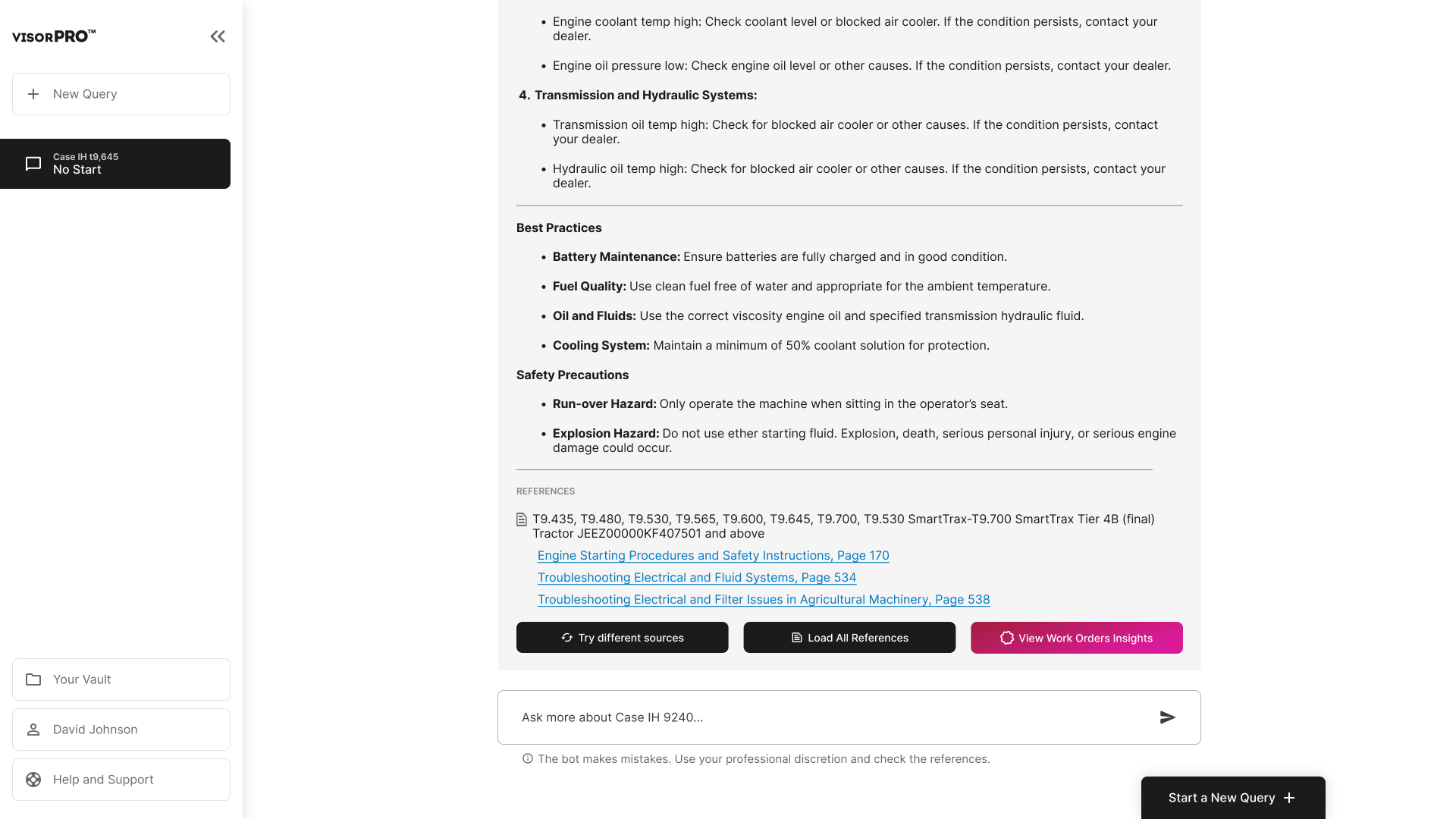
Second iteration of the prototype.
Work Order Insights was initially designed as an extension of Vi’s answers. However, we realized it holds equal importance and might not even need to be directly linked to the AI responses. We took it out of the response and made a dedicated section for it.
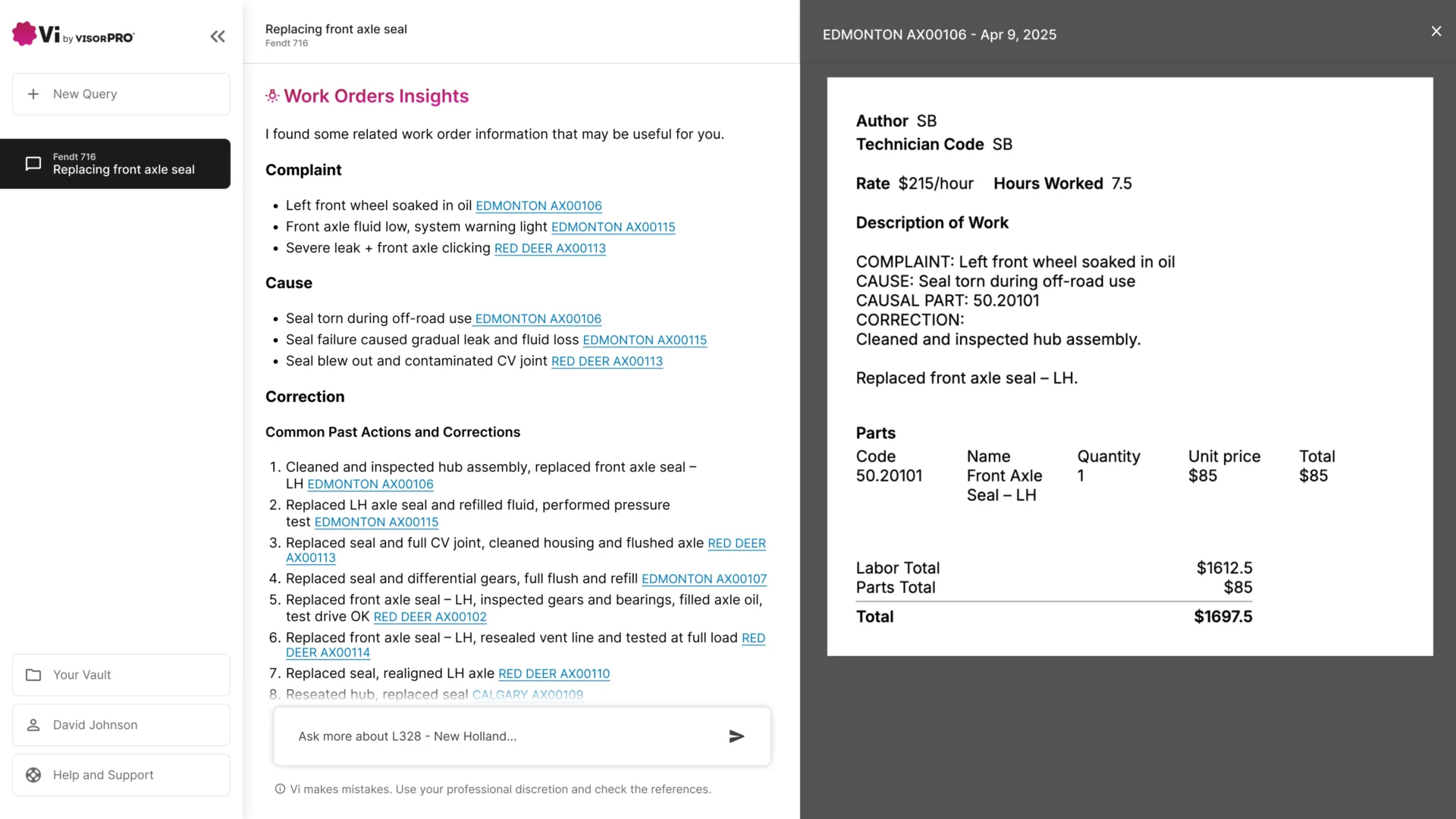
Final interation of the prototype. A work order preview is shown on the right.
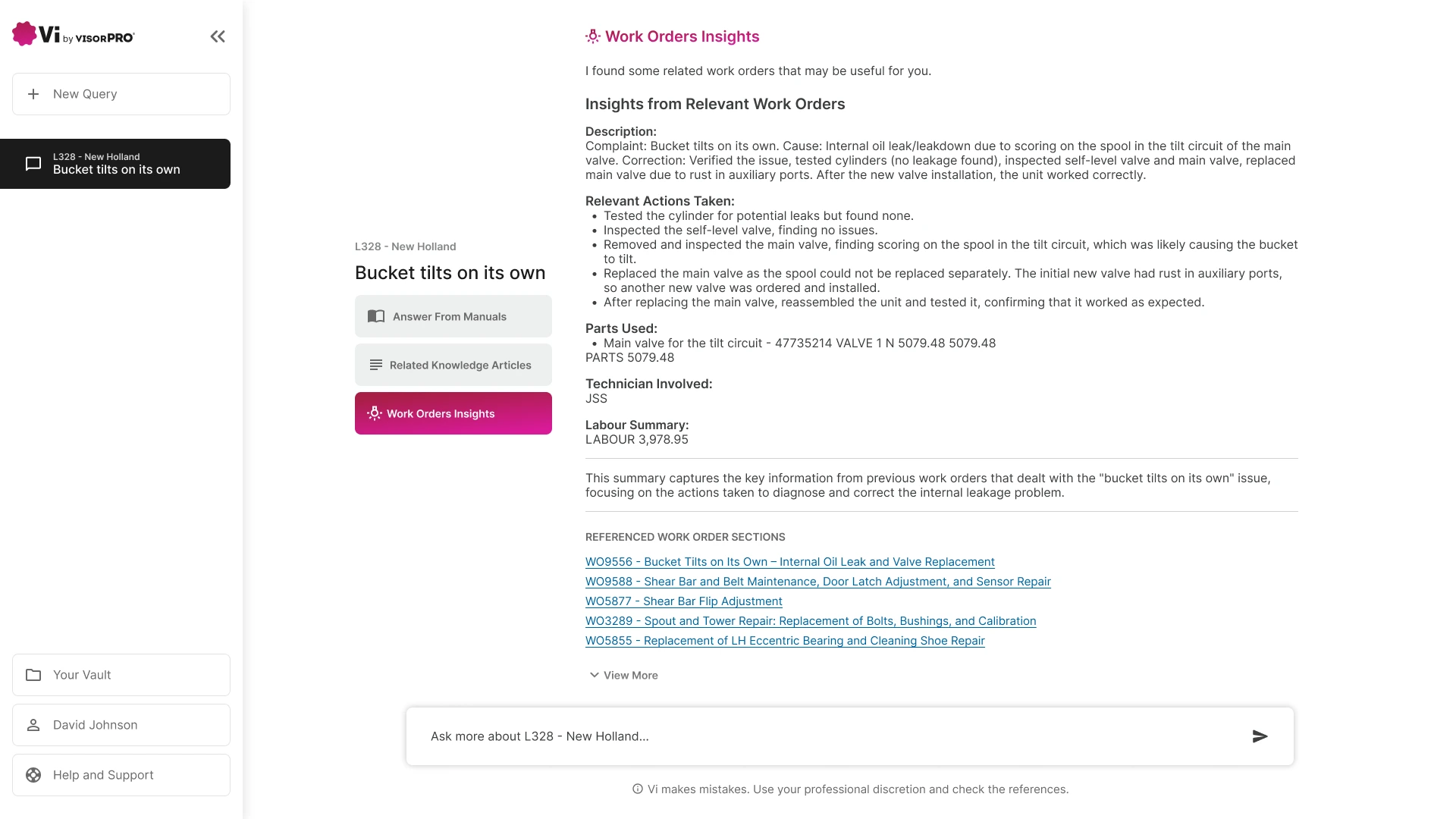
Final interation of the prototype. Tabs allow users to switch between answer types.
This question reflects concerns raised by our developers regarding ensuring Vi selects the correct documents for review. After analyzing user interactions with digital products, we observed that users clearly know the document type containing the information they need. Therefore, we implemented a Source Selector, empowering users to choose the documents used to generate their answers.
Conclusion
A 118% increase in daily active users and a 5% reduction in time spent searching for past work.
Decoupling Work Order Insights from the AI response flow allowed us to position it as a standalone feature—one that surfaces critical repair knowledge without adding friction to technicians’ workflows. By aggregating and indexing previous work orders, then highlighting high-signal patterns within them, we turned stagnant data into a smart, searchable tool. The result was a lightweight but powerful layer of context that accelerated diagnostics and supported knowledge retention across teams.
Post-launch, the feature drove a 118% increase in daily active users, signaling stronger engagement from service teams. Our partners also reported a 5% reduction in time spent searching for prior work, directly translating to faster repairs and less downtime in the field.
Reflection
This project proved that smart design isn’t about adding more—it’s about unlocking what’s already there.
This project was a reminder that the best solutions often come from reframing the problem. What started as a plan to capture internal knowledge became a deeper dive into how technicians already work—and where existing tools fall short. By shifting our focus to work orders, we tapped into a rich source of underused data and turned it into something immediately useful.
Collaborating closely with both users and developers helped us stay grounded in real-world constraints while still delivering something impactful. Seeing the increase in engagement and the reported time savings confirmed that small, well-integrated features can drive meaningful change when they’re built with the right focus.